Remote Interior Photography
Professional interior photos of any space — shot by whoever is already there, directed by you. No photographer call-out fee, no scheduling, no travel.
Short answer
Remote interior photography means someone already inside a property — a host, cleaner, tenant or on-site staffer — holds a smartphone while a photographer or manager controls framing, focus and exposure from anywhere. With CLOS you direct the shot live, straighten verticals, expose for bright windows, and trigger full-resolution stills that land in the cloud as you shoot. It replaces a $150–$500 photographer call-out for short-term rentals, interiors and hospitality spaces.
Key takeaways
- Real photographs of the actual room — directed live, not AI-generated renders or virtual staging
- Whoever is already on-site is your camera operator — a host, cleaner or co-host, with zero photography skill
- You control the frame — straighten verticals, lock exposure for windows, choose the ultra-wide lens for tight rooms
- Shoot a whole portfolio remotely — standardize interiors across every unit, city or country from one desk

How it works with CLOS
Interiors are unforgiving — crooked verticals, blown-out windows and dark corners are what separate a listing that books from one that scrolls past. CLOS puts those decisions back in your hands, even when you are nowhere near the property.
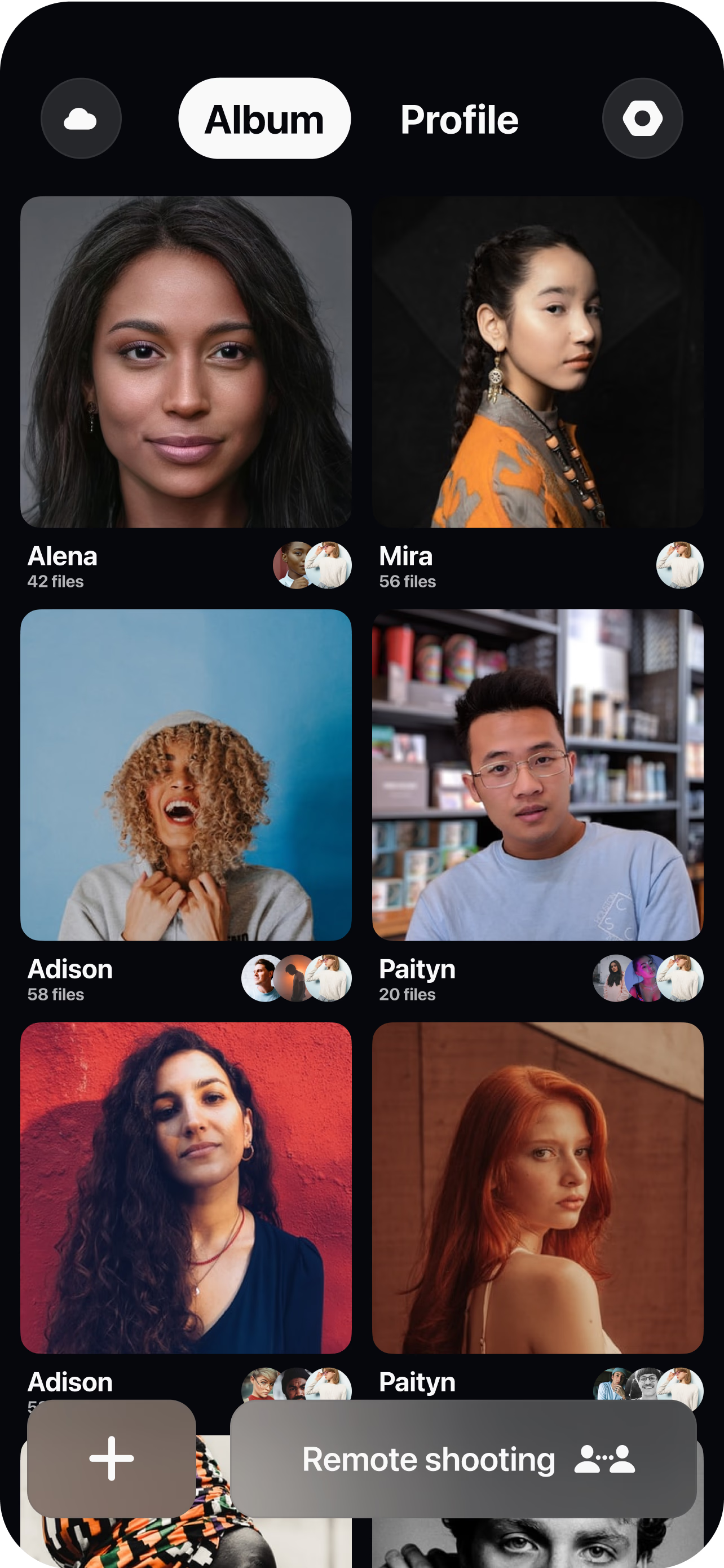
Create a room for the property
Spin up a session and send whoever is on-site a single link — the host, the cleaning crew between turnovers, or a co-host. They join from their own phone. Nothing to install for viewers, and no scheduling a photographer around a check-out.
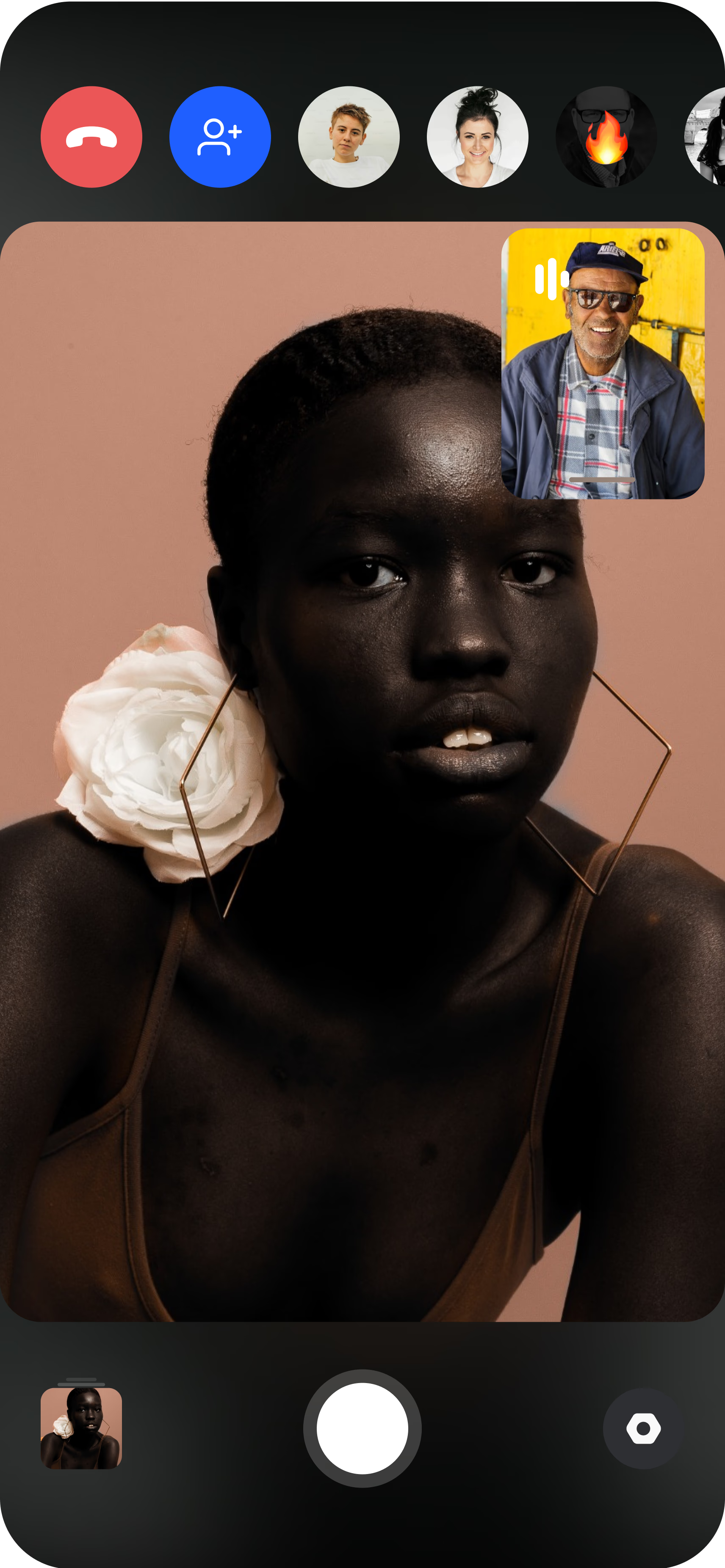
The on-site phone becomes your camera
They join from a smartphone and you see the live feed instantly. Ask them to prop the phone or hold it steady at chest height, then take over. From here they only have to move from room to room — every creative decision is yours.
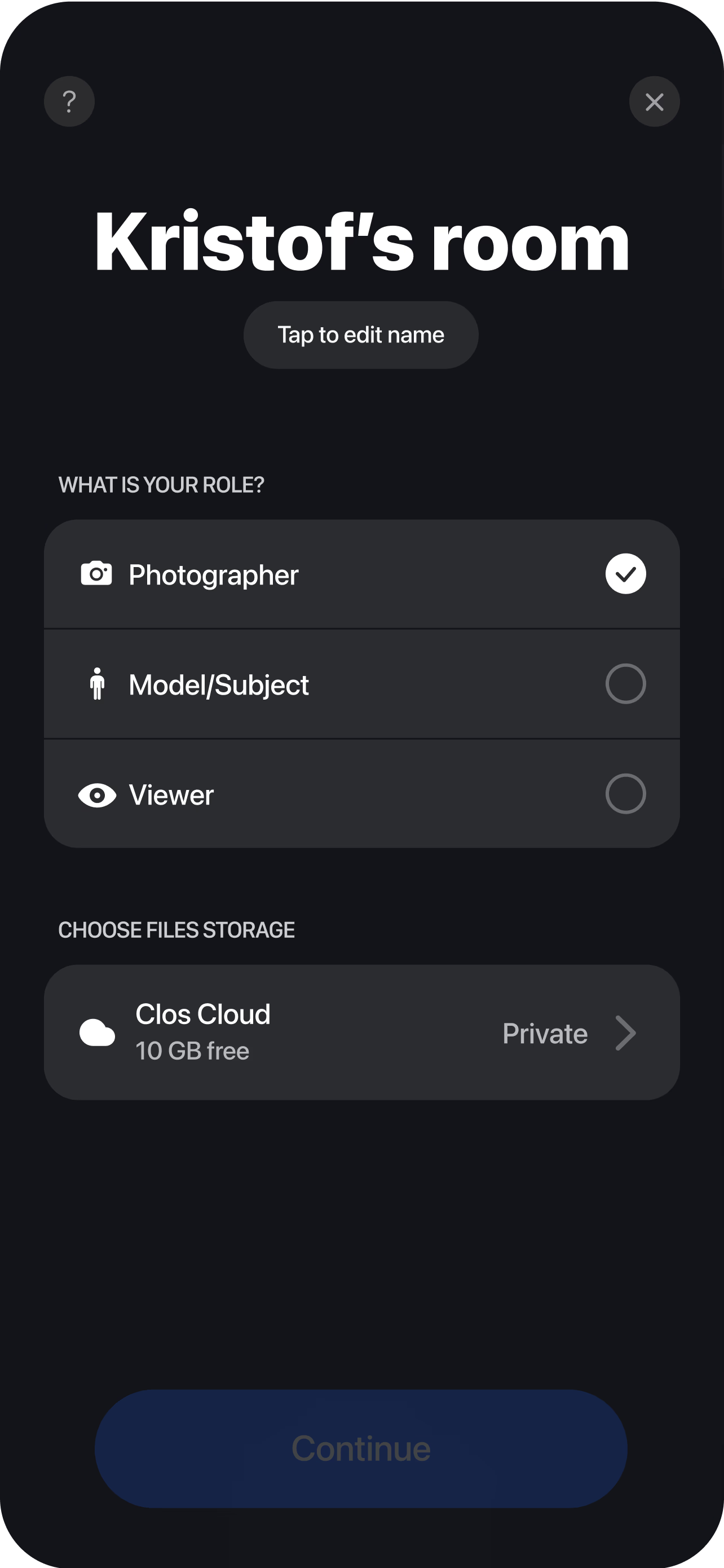
Direct, capture and deliver
Square up the frame, lock focus and exposure so a bright window keeps its view and a dark corner keeps its detail, switch to ultra-wide for tight bathrooms and galley kitchens, then trigger full-resolution stills. Every frame uploads to your cloud album as you shoot — ready for the listing the same afternoon.
Interiors shot properly, without the call-out fee
Professional interior photography for a short-term rental typically runs a few hundred dollars per property per session, and that is per property — a number that stops making sense the moment you manage more than one unit, or you refresh a listing after new furniture, a repaint or a seasonal restyle.
The usual fallback is that the host shoots it themselves on a phone. The photos are technically fine and compositionally wrong: tilted verticals, a sofa shot from standing height, a window that has blown out to pure white, a room framed so tightly it looks smaller than it is. The gap is not the camera — modern phone sensors comfortably exceed listing platforms’ image requirements — it is that nobody is art-directing.
Remote interior photography closes exactly that gap. The phone stays in the hands of whoever is already there; the eye moves to you. Through remote camera control you decide the height, the angle, the lens and the exposure, and you keep shooting until the room is right — the same feedback loop as standing in the room, without being in it.
One consistent look across every property
Consistency is where portfolios usually fall apart. Ten properties shot by ten different hosts produce ten different visual identities, and a brand built on “stay with us” stops looking like one brand. Because you direct every session personally, the same framing height, the same lens choice and the same exposure logic apply to a studio in Lisbon and a cabin in Colorado.
That makes remote capture especially useful for portfolio operators: property managers running dozens of units, boutique hospitality groups, co-living and serviced-apartment brands, and interior designers documenting finished projects they can no longer physically revisit. Shoot the whole portfolio in a week of scheduled sessions rather than a quarter of photographer bookings.
Timing helps too, and it is free. Interiors look best in soft, directional daylight — roughly mid-morning and mid-afternoon, or any overcast day, when diffused light fills a room without hard shadows. Because booking a remote session costs nothing but a link, you can simply schedule the session for good light instead of paying a photographer to sit through bad light.
Straight to the listing
Every frame streams to your cloud album the moment it is captured through real-time cloud delivery, so there is no memory card to hand over and no waiting on a turnaround. A co-host, a channel manager or a retoucher can pull images while you are still shooting the next room, and the listing can go live the same day the unit is ready. On Pro plans, RAW (DNG) capture gives you the latitude to recover a bright window or lift a dark corner in post, and non-expiring albums keep a property’s image set available for as long as you list it.
Who uses this
- Airbnb, Vrbo and short-term rental hosts shooting a new listing or refreshing one after a restyle, without a photographer call-out.
- Property managers and co-hosts standardizing interior photography across a portfolio of units in different cities — see the marketing teams persona page.
- Boutique hotels, hostels and serviced apartments capturing rooms between turnovers with no crew on-site.
- Interior designers and home stagers documenting completed projects remotely for portfolios and case studies.
- Letting and rental agencies refreshing interior sets for long-let listings at scale — see also virtual real estate tours for sales listings and walkthrough video.
- Furniture and homeware brands shooting products in real interiors rather than a studio set.
Frequently asked questions
What is remote interior photography? +
Can I photograph my Airbnb without hiring a photographer? +
Who holds the phone at the property? +
Do phone photos look professional enough for a listing? +
How do I photograph small rooms like bathrooms and kitchens? +
Is this the same as a virtual real estate tour? +
What does it cost? +
Related
- Virtual real estate tours
Listing photos and walkthrough video for property sales.
- Remote product photography
The same directed workflow applied to products.
- Remote video shoot
Capture walkthrough and room video remotely.
- Guide: the complete guide to remote shoots
Plan and run a remote session end to end.
- For marketing teams
How property and marketing teams use CLOS.
Shoot your next property without leaving your desk
Create a room, send whoever is on-site a link, and start capturing interiors in minutes. Free to start, no credit card required.